Best Video Download Chrome Extension Pcmag

The Google Chrome browser replaced older browsers like Cyberspace Explorer and Mozilla Firefox as the industry standard in the early 2010s and at present leads the style for web browsers. Google Chrome is fast, piece of cake to use and in possession of the largest library of browser extensions. Information technology is undoubtedly a solid browser for personal and professional employ, equally nosotros'll see in our Google Chrome review.
Cardinal Takeaways:
- Google Chrome has a larger library of extensions than any other browser.
- Chrome is a fast and easy-to-employ browser with a lot of useful tools, but Google has a reputation for using Chrome to invade its users' privacy.
- Google Chrome offers some controls for opting out of data collection on the "my activity" folio.
- Chrome is capable of making the same data bachelor on your desktop and mobile device through device synchronization.
Google Chrome suffers from one fatal flaw, and information technology's a flaw with all of Google's services: its privacy practices — or the lack thereof. Google rakes in a huge profit from collecting the personal data of its users for the creation of personalized ads, and then Google Chrome isn't quite a "privacy-first" browser like some of its competitors.
Even if you've opted out of some data drove by adjusting your privacy settings, it's worth noting that Google has violated its own privacy policy in the past, then there'south no telling how much you can trust Google's privacy controls.
With that said, Google Chrome still performs excellently on most fronts and deserves its spot as the most popular spider web browser in the world. Let'due south accept a closer look at the ups and downs of this iconic browser in our Google Chrome review.
-
Completed a fresh review of Google Chrome, including operation, privacy and security; added an incognito section, a Google account section and a privacy sandbox section.
-
Google Chrome is a nifty browser for everyday use every bit far every bit the browser's capabilities are concerned. However, Google's data collection practices make Chrome 1 of the worst browsers for privacy, and we recommend using a more privacy-conscious browser.
-
The biggest reason to opt for another browser is to avoid Google harvesting your personal information. Google makes almost of its coin by collecting the data of its users and using it for targeted advertising, so Chrome won't exercise much to protect your privacy.
-
Chrome is secure from external threats like malicious websites, malware and hackers, but its privacy controls won't stop Google from collecting at to the lowest degree some of your personal information.
Google Chrome Review: Alternatives
Google Chrome: Strengths & Weaknesses
Pros:
- Piece of cake to apply
- Largest library of extensions
- Wide range of in-browser features
- Pretty fast
- Cross-device synchronization
Cons:
- Serious privacy concerns
Features
One of Google Chrome'due south biggest assets in terms of features is its vast collection of browser extensions. No other browser rivals Google'due south virtually limitless selection of extensions. That said, other browsers are catching upwardly by using Google Chrome'south open-source code to brand its extension library compatible with browsers like Brave, Microsoft Edge, Mozilla Firefox and others.
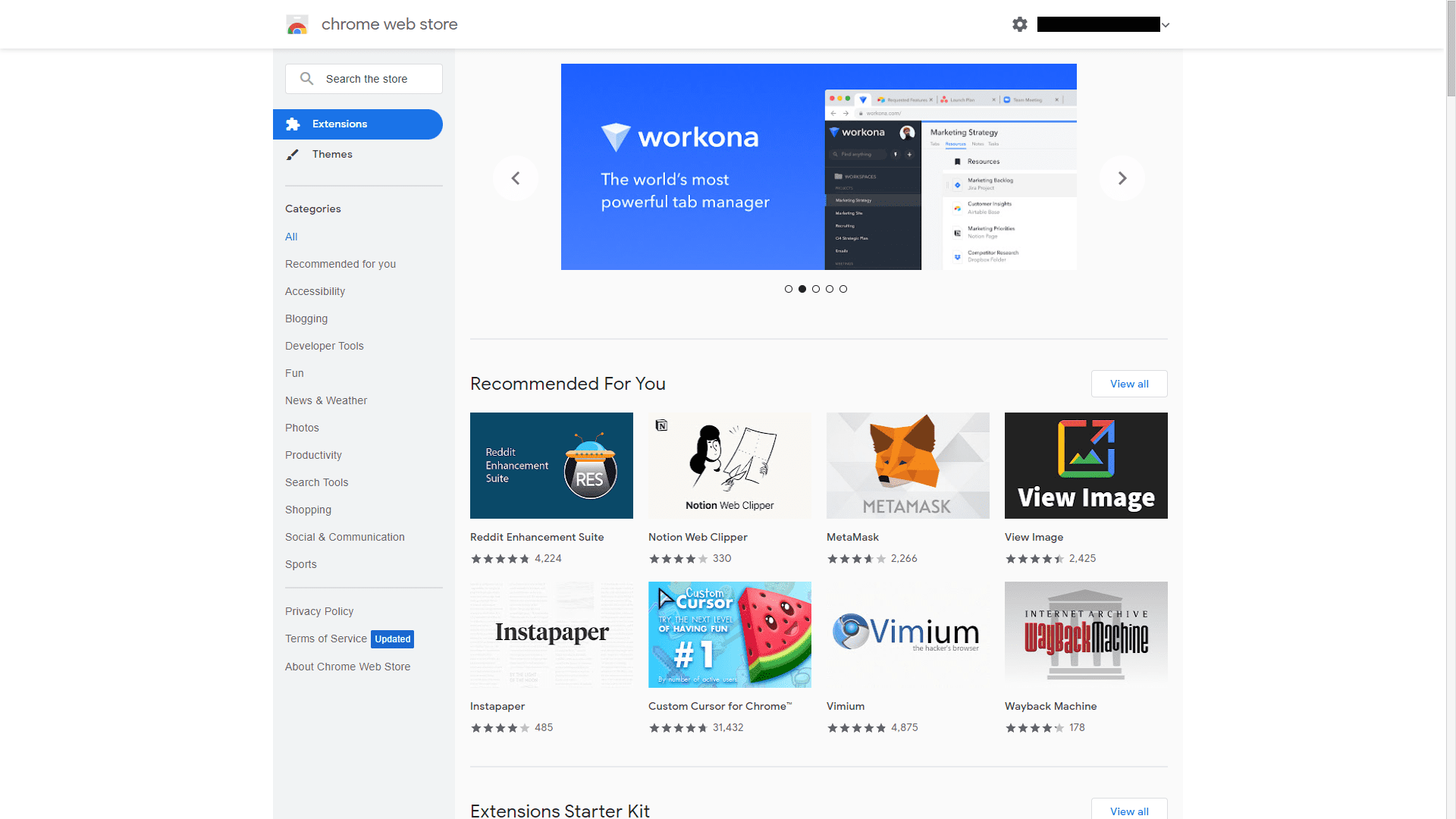
Google Chrome has the largest library of extensions, numbering in the tens of thousands.
The Chrome Spider web Store is updated with hundreds of new extensions every day from thousands of developers, so no matter what obscure job you need to go done, there is probably an extension for it. Whether you want auto-refresh, safe browsing, a password manager or a improve manner to manage many tabs, at that place's probably an extension for you.
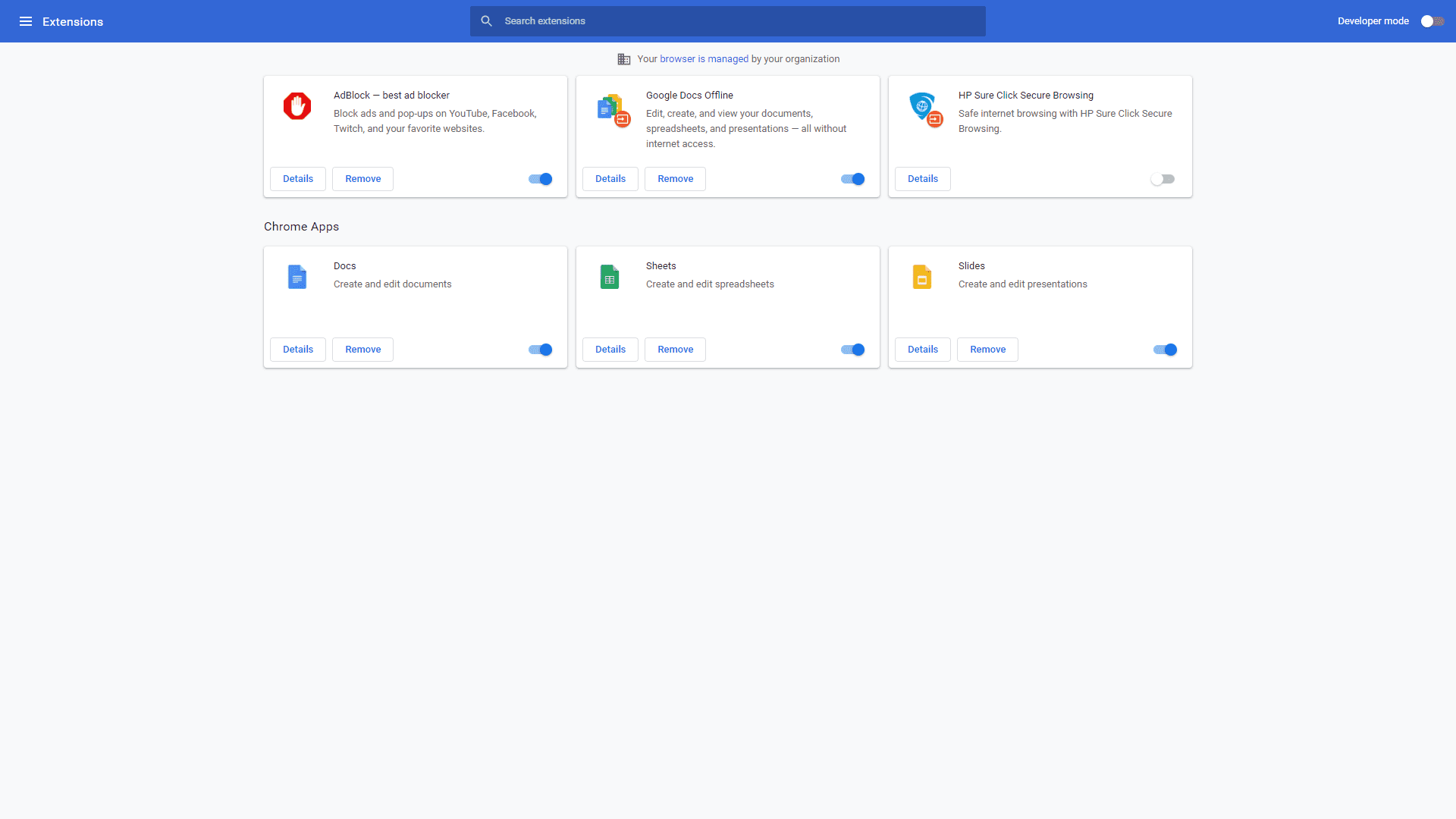
Out of all browsers, Chrome has the nearly comprehensive library of extensions.
Device Sync
Google Chrome users tin synchronize the data betwixt the desktop and mobile versions of the browser with their Google business relationship. Once you've signed in, the browser offers a selection of options for syncing types of data to other devices, such as your settings, browsing history, bookmarks, extensions, reading list, themes, saved passwords and more.
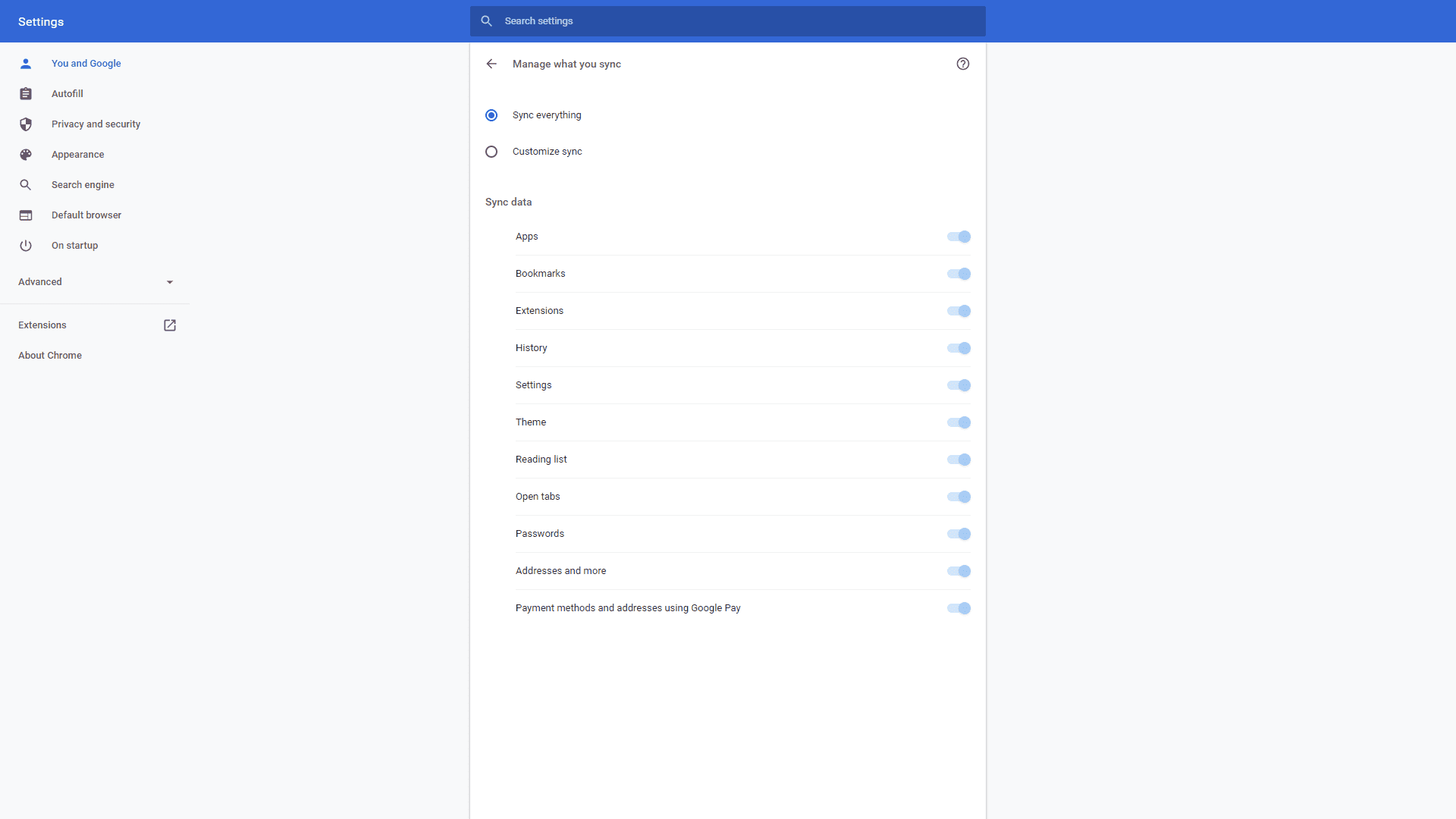
Seamlessly switch from ane device to some other without losing admission to your saved information.
Managing Your Google Business relationship
Your Google account is the seat of every Google service yous apply. Using any of Google's services requires creating a Google account from which y'all tin manage your data and settings for all your Google apps.
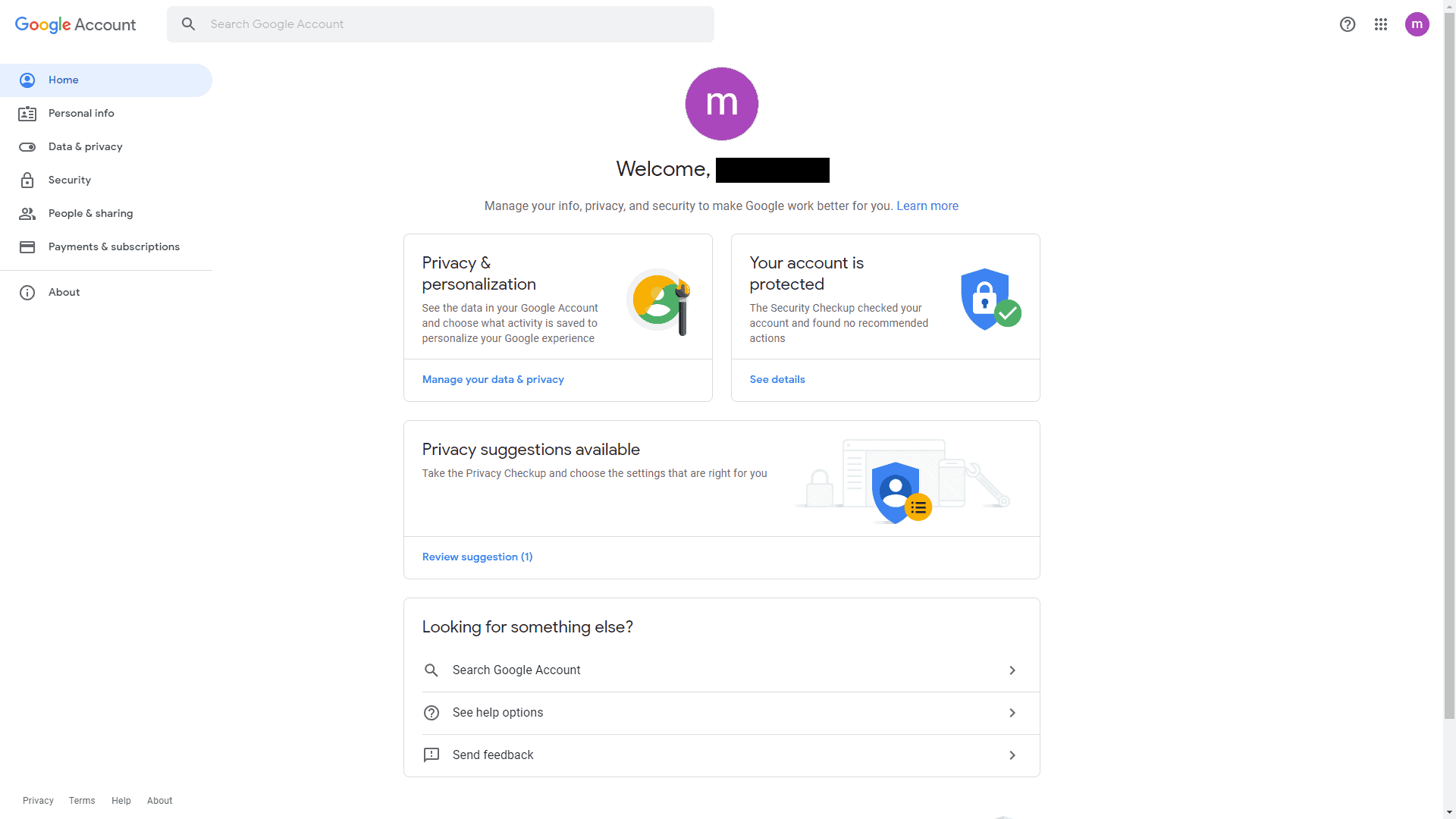
Your settings and data won't be spread across multiple services when yous utilise your Google account to manage everything.
Whether you're using Gmail, YouTube or Google Chrome, you lot'll only need to sign in to a single business relationship, unless y'all choose to create more than one account. Google provides the option to create personal and concern accounts.
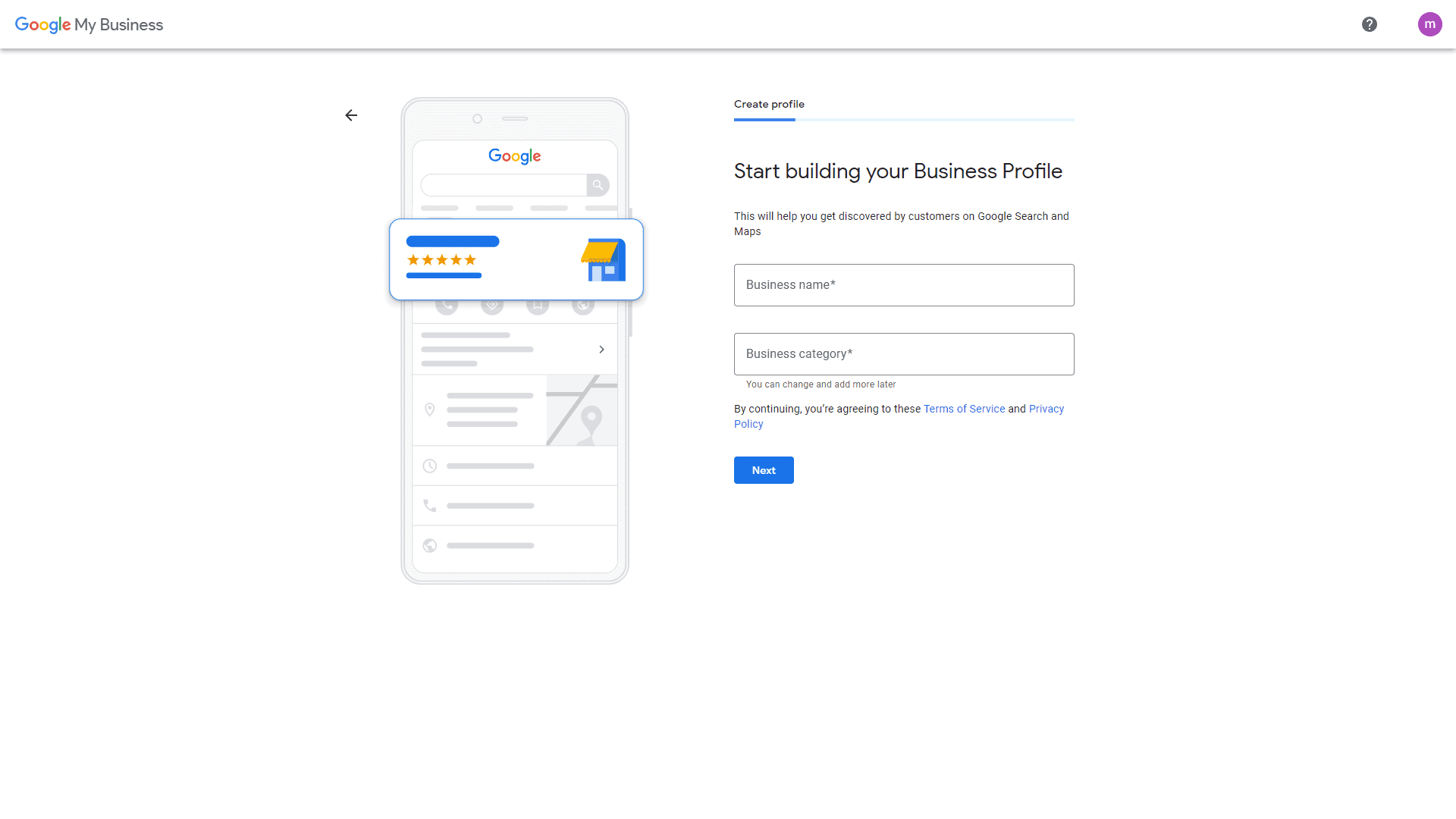
Create a contour for your business organization so your customers can see it on Google Maps.
Signing in to Google Chrome with your Google account is a user-friendly way to go along your search history, bookmarks, settings and other synced information available, no matter the device. Whether you're using your desktop, your phone or someone else's internet-connected device, all your synced browser information tin be accessed from anywhere.
Google Chrome can exist used to browse the internet without signing in to the browser with your Google business relationship, just signing in solves the privacy problems of shared computers. Multiple Google accounts can be added to a single device's Chrome browser, so each user tin access their synced browser information while keeping it separate from anybody else.
For business accounts, an admin account tin can be created using a not-Gmail company email accost. The admin has the power to manage the settings and policies for multiple users at once, including each user's Chrome settings.
Right-clicking inside the browser opens up a context menu of features for quick access. In addition to standard browser features like copy-and-paste actions or opening links in new tabs, Google further integrates its search engine into Google Chrome with the "search Google for image" activity. This was in one case but possible past downloading and uploading images into Google Images.

Google Chrome users tin can create links that volition display highlighted text on the recipient'due south cease.
This is a welcome visual complement to the time-saving selection to search Google for highlighted text through the context menu. The context carte du jour also includes the option to create QR codes for images and pages on the internet without having to install 3rd-party extensions.
Alongside the simple "re-create" action is the relatively new characteristic "re-create link to highlight," which volition create a link to a webpage with a highlight placed over the text you've selected. This is a useful characteristic for directing the recipients of your link to specific information on the page and then they don't accept to scroll through the page to find information technology.
Reading List
Like any browser, Google Chrome has a elementary Bookmarks feature, but information technology as well includes a similar feature with a slightly different purpose. When bookmarking a folio, you can add it to your "reading list" for offline viewing later on in case you anticipate existence on a plane, in a remote area or in some other setting where you lot won't have internet admission.
You won't lose access to your favorite web pages when you go offline.
Adding a page to your bookmarks requires the internet to access the page. The "reading list" provides offline availability by downloading the folio in accelerate. Yous can add together spider web pages to your reading list from your computer and admission them later from your telephone (or vice versa) by syncing your devices. All documents will exist displayed in Chrome's congenital-in PDF reader, fifty-fifty when you lot're offline.
Ease of Employ
Part of what makes Google Chrome an easy browser to use is its unproblematic user interface. In the desktop and mobile versions, the browser spares the user visual elements, despite coming with loads of features and extensions.
User Interface on Desktop
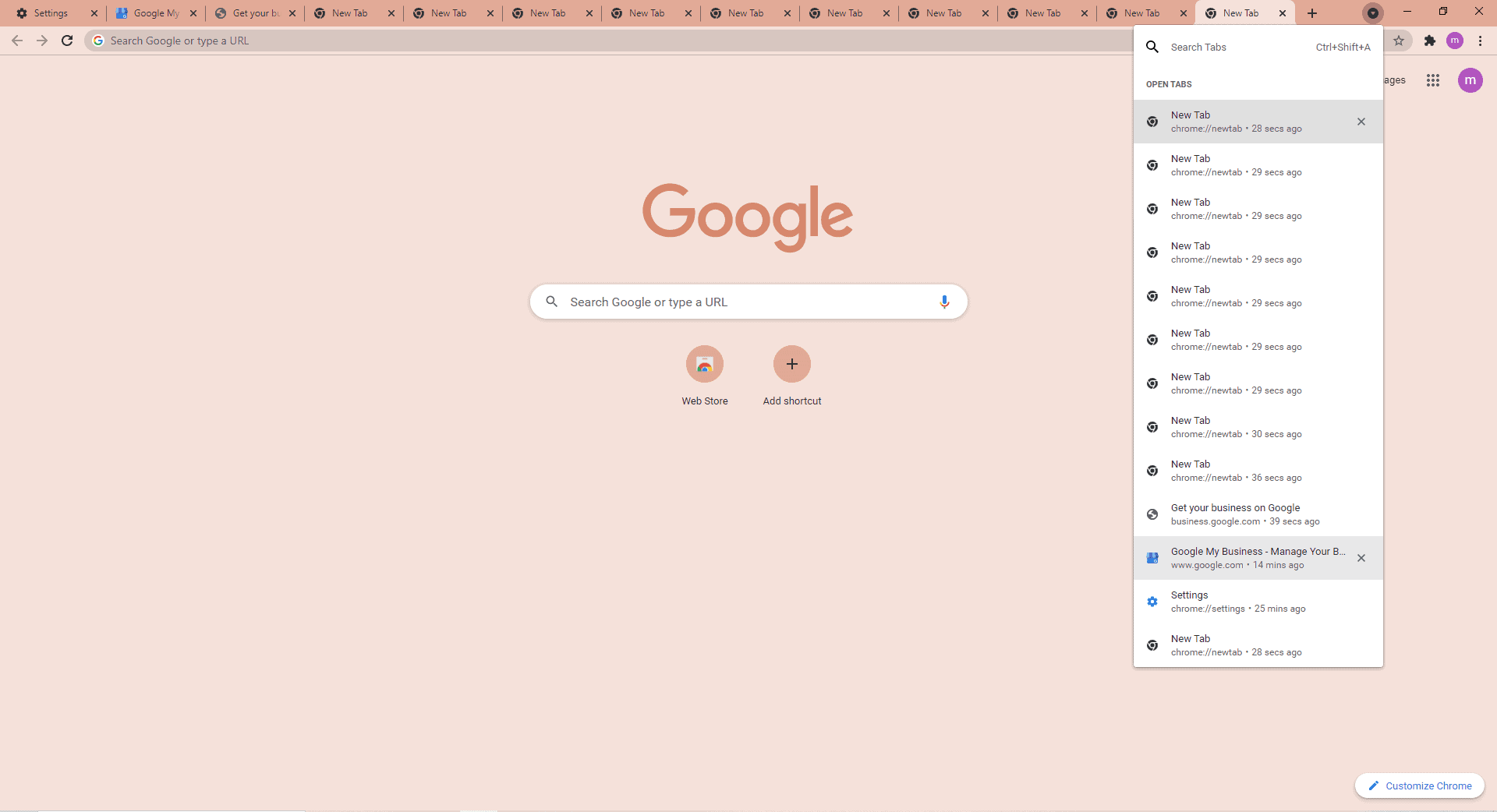
Tab direction in Chrome is easy with Chrome'southward tab menu and tab groups.
The browser window includes the address bar, navigation buttons, tabs at the peak, a button for your extensions, a Google contour button, and a push button that opens the Settings bill of fare where near of its features are neatly tucked abroad. The accost bar — or "omnibar" — returns Google Search results past default, just you can configure it to return the results of any search engine.
The desktop version of Google Chrome can pack a big number of tabs into the taskbar at once earlier they go off-screen. Virtually users should have more than enough space for their tabs, simply less text is displayed in each tab every bit you add more tabs.
Fortunately, the "search tabs" push button beside the minimize button volition drop down a menu of all open tabs for easy navigation. Favicons remain displayed in each tab, even when the taskbar reaches its maximum capacity and no longer displays text.
Another way to keep your tabs organized is to assign tabs to groups. Right-click on whatsoever tab and click "add to new grouping" in the menu that appears. The next menu to announced will display a bar where you can type in the name of the tab grouping and assign a color to distinguish one grouping from the next. New tabs will non be added to a group until they are manually assigned one.
User Interface on Mobile
The mobile version of Google Chrome is unproblematic and easy to employ. It doesn't vary much from its desktop counterpart, but one of its most notable features is the "request desktop site" button in the "settings" menu.
Whether you're using Google Chrome on desktop or mobile, your data will be bachelor through synchronization.
Some sites don't take slap-up mobile versions and are better viewed in the desktop version, especially when key elements are just on the desktop site.
Performance
We tested Chrome, Brave, Mozilla Firefox, Opera and Vivaldi using three benchmark tests, and Chrome came in offset place in each one. Dauntless came close plenty to Chrome's speeds to exist more or less identical in practice, while the rest fell further behind, though not past much. Check out our article on the six fastest web browsers for more data on browser speed.
| Benchmark Test: | Speedometer |
|---|---|
| Browser | Runs per Minute |
| Chrome | 121 |
| Dauntless | 102 |
| Mozilla Firefox | 95.five |
| Opera | 116.6 |
| Vivaldi | 97.three |
| Criterion Exam: | Jetstream |
|---|---|
| Browser | Score: |
| Chrome | 125.917 |
| Dauntless | 116.936 |
| Mozilla Firefox | 80.131 |
| Opera | 121.802 |
| Vivaldi | 116.540 |
| Benchmark Examination: | Motion Mark |
|---|---|
| Browser | Score |
| Chrome | 496.32 |
| Brave | 444.67 |
| Mozilla Firefox | 145.93 |
| Opera | 373.27 |
| Vivaldi | 285.25 |
Chrome has acquired a reputation for being resource-hungry compared to most browsers, despite its fast speeds. The browser takes off at a brisk pace if you don't take too many windows or tabs open up, just giving Chrome more to do at the aforementioned fourth dimension will crusade it to devour your device's RAM more quickly than most of its competitors.
The good news is Google alleviated its RAM usage problem with an update in March 2021. Google released Chrome 89 with an advanced memory allocator known as "PartitionAlloc Fast Malloc" designed to terminate any one process from consuming more than ten% of your device's total retentiveness.
The Chromium blog states this update saves up to 22% of system retention in the browser process. The blog goes on to say the update can relieve upwards to 100MiB per tab by discarding or reusing information the agile tab isn't using, like images that go off screen when scrolling past them or opening another tab.
Security
Chrome uses HTTPS past default and problems a warning before letting the user access a site simply available in HTTP. Now that virtually of the internet uses HTTPS, that shouldn't exist a common problem, but Chrome has protections in place against unsecured and suspicious websites.
Using the HTTPS protocol by default also means Chrome operates faster than before, since it volition connect to the website's HTTPS endpoint instead of starting with HTTP and redirecting to HTTPS.
Ads & Pop-ups
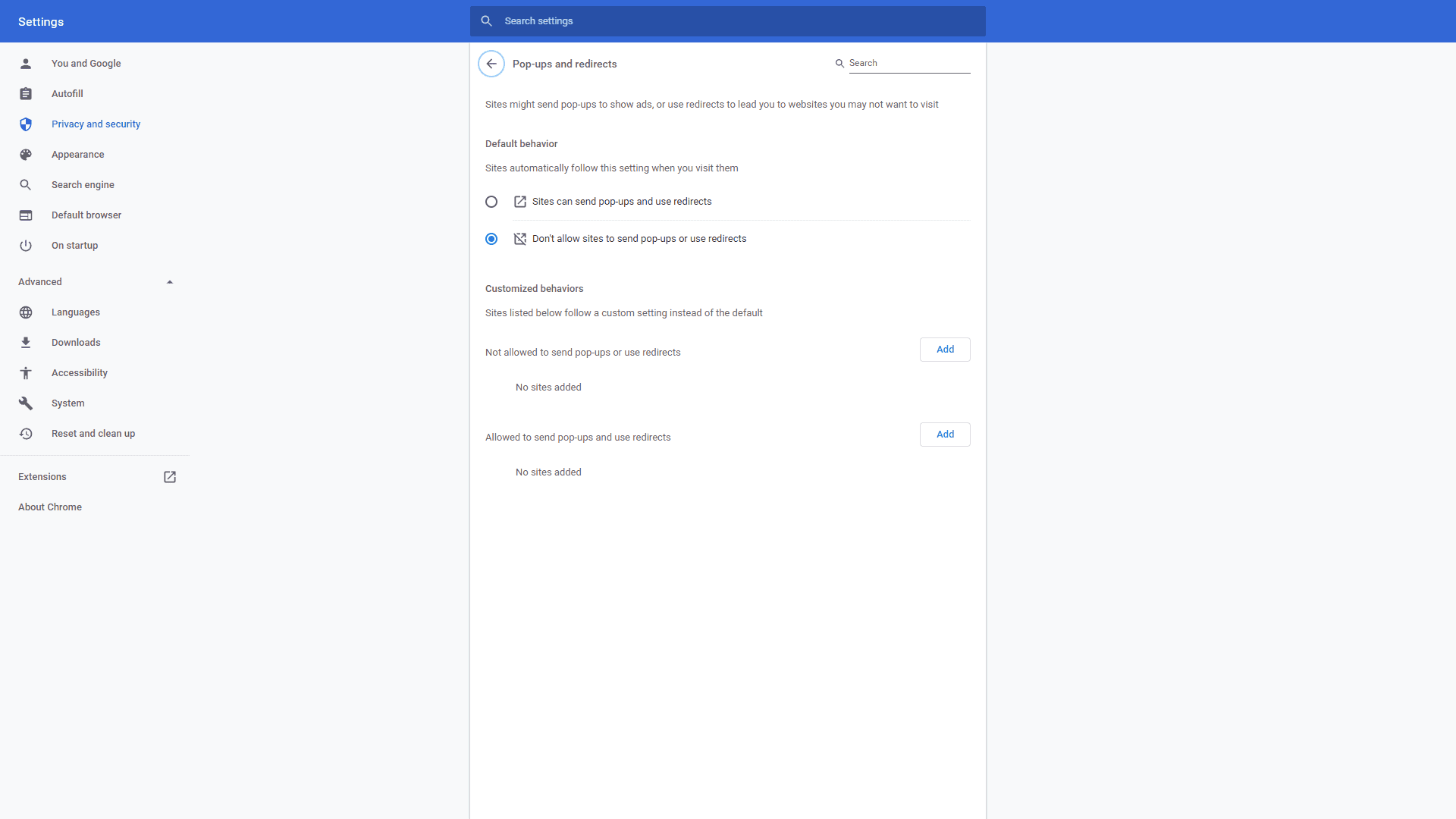
Sometimes it'southward necessary to allow popular-ups and redirects for websites. Chrome lets you allow or block them as y'all see fit.
Chrome automatically blocks certain ads. It doesn't block all ads by default since Google relies on advertizement for its acquirement, then the browser is designed only to block ads that fall short of the standards ready by the Coalition for Ameliorate Ads, founded in part past Google itself.
Browsers designed for security, like Dauntless, automatically block all ads past default (read our Brave review). Fortunately for Chrome users, there are enough of complimentary ad blockers in Google's library of extensions.
Popular-ups and redirects are blocked by default, but you lot tin can manually allow them if a trusted website'south functionality involves the use of pop-ups and redirects.
Credential Storage
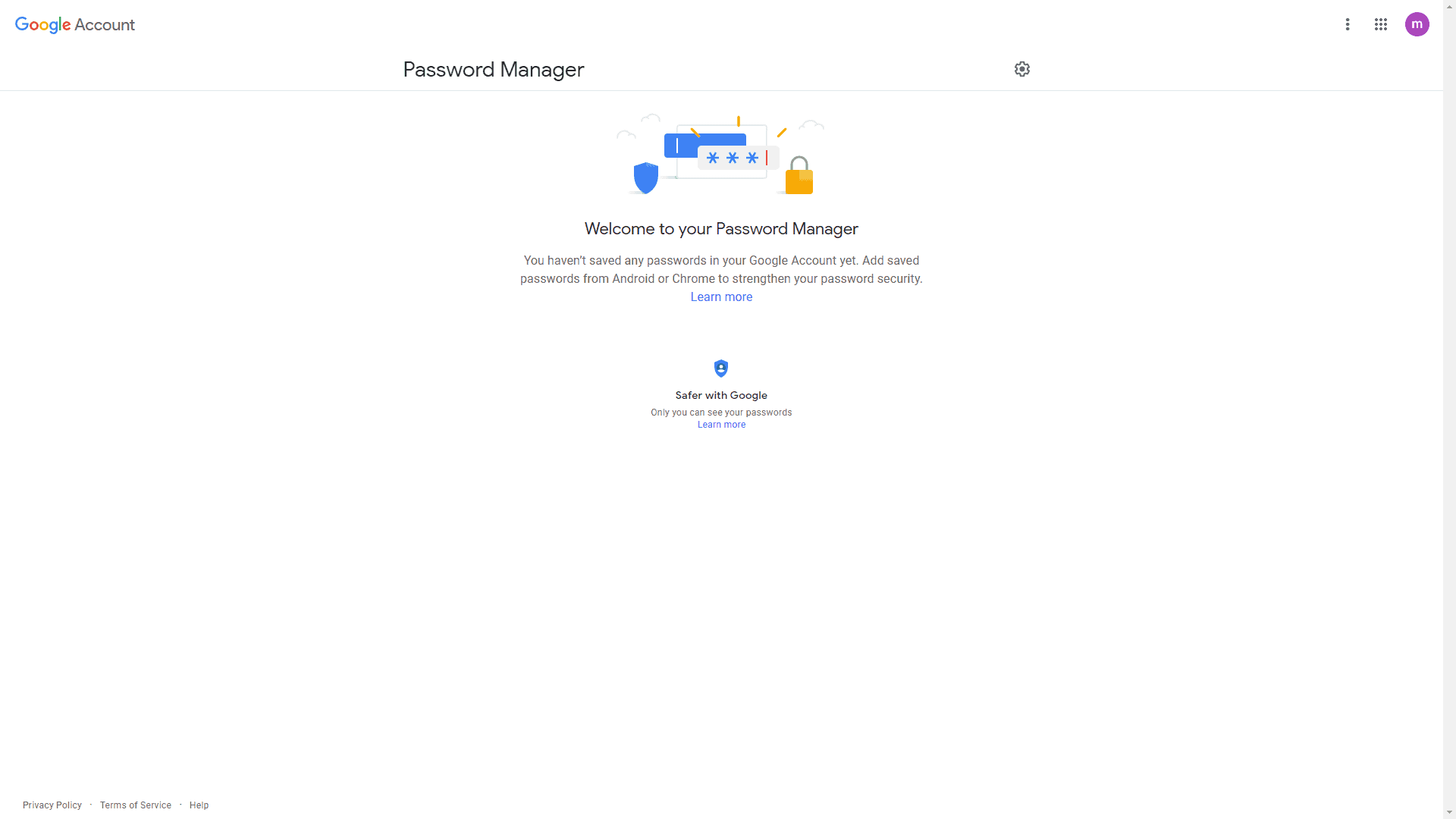
Every password you lot salvage to your browser tin can be managed from a single place.
Chrome gives users the pick to shop their credentials in the browser to remain signed in to their favorite websites. The browser will enquire if you want to save your password each time you sign in to a website or service, and you can view your saved passwords at passwords.google.com.
There are hundreds of countersign manager extensions compatible with Chrome, but we've picked out the all-time ones in our review of the v best password manager extensions.
Automatic Updates
Google quickly detects browser vulnerabilities and promptly issues patches in just days or even hours afterwards discovery. Chrome automatically checks for updates and applies them every time you shut and reopen the browser.
A notification informing y'all there are pending updates waiting to be installed will appear in your browser if it hasn't been closed in a long fourth dimension. This icon will plough from dark-green to xanthous to red as time goes on to indicate how outdated your browser is.
Privacy
Despite Google's innovative products and services, the visitor is the biggest problem with Google Chrome. The browser may be secure confronting external cyberthreats — like malicious websites and malware — but Google has a spotty rail record when it comes to handling its users' private data.
The biggest portion of Google's profit comes from ad revenue. Google collects your personal data and uses information technology to create ads tailored to your interests. Information technology also uses the information to "personalize" the functionality of Google services according to your browsing patterns. One example of this is the auto-consummate search results when you lot type into the search engine.
Google presents its information collection practices as a way to amend each user's experience with Google services. If you observe these features useful, by all means employ them. It's important to empathise, though, that convenience and personalization comes at a cost.
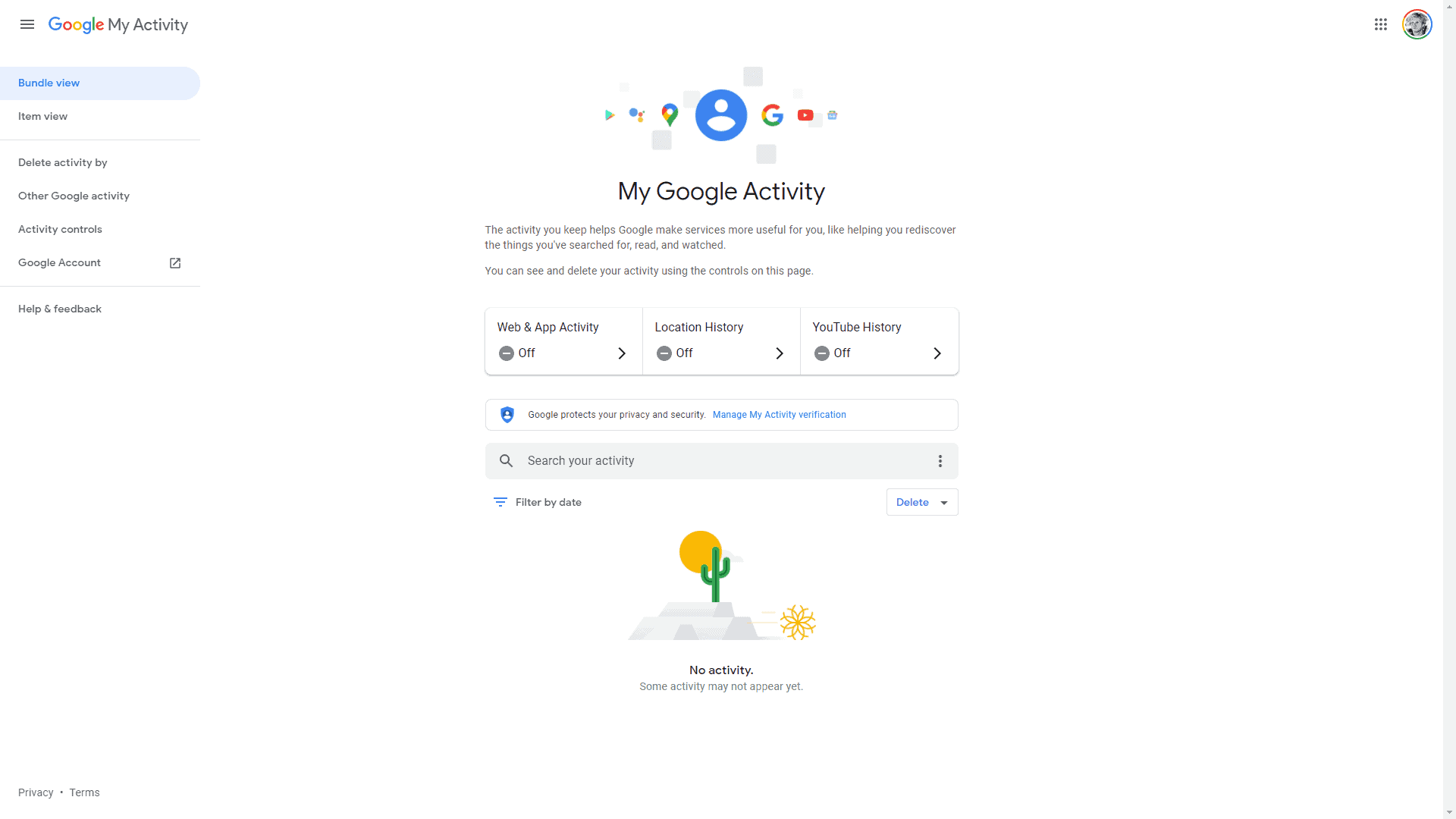
All your nerveless information tin be viewed in the "My Activity" Google page.
You can view the data Google nerveless on y'all by going to myactivity.google.com. The "my activity" web page classifies data into categories, such as your spider web and app activeness, your location information, watched YouTube videos, and dozens of other types of data.
Each of these information categories is allowed to be nerveless by Google by default and that permission has to be manually deactivated if you want Google to stop collecting information about you lot. Even if you've disabled forms of information tracking in "my activity," though, at that place'south no way to be certain if Google is turning against its own privacy policy or not.
Google has been plant on many occasions to exist tracking the location information of smartphone users even when the location history feature was turned off. Google as well admitted to tracking its users' purchases through their Gmail accounts without their noesis or consent. This contradicts Google's merits that no one at Google will exist able to read any user's emails.
If you lot want to go further than opt out of data collection on "my activity," check out our elevation picks for the best privacy extensions.
Privacy Sandbox & the Federated Learning of Cohorts
Google rolled out a trial version of the Privacy Sandbox in Chrome in early 2021 as part of the company's efforts to reform the online advertizing industry. According to Google, the Privacy Sandbox will shift online advertizement methods away from cross-site tracking mechanisms and 3rd-party cookies to alternating methods that respect user privacy.
You volition observe the Privacy Sandbox in Chrome under Settings > Privacy and Security > Privacy Sandbox. It is enabled by default in select regions. The only two settings permit y'all enable or disable the Privacy Sandbox trials and the alternative advertising method known as "FLoC," or the Federated Learning of Cohorts.
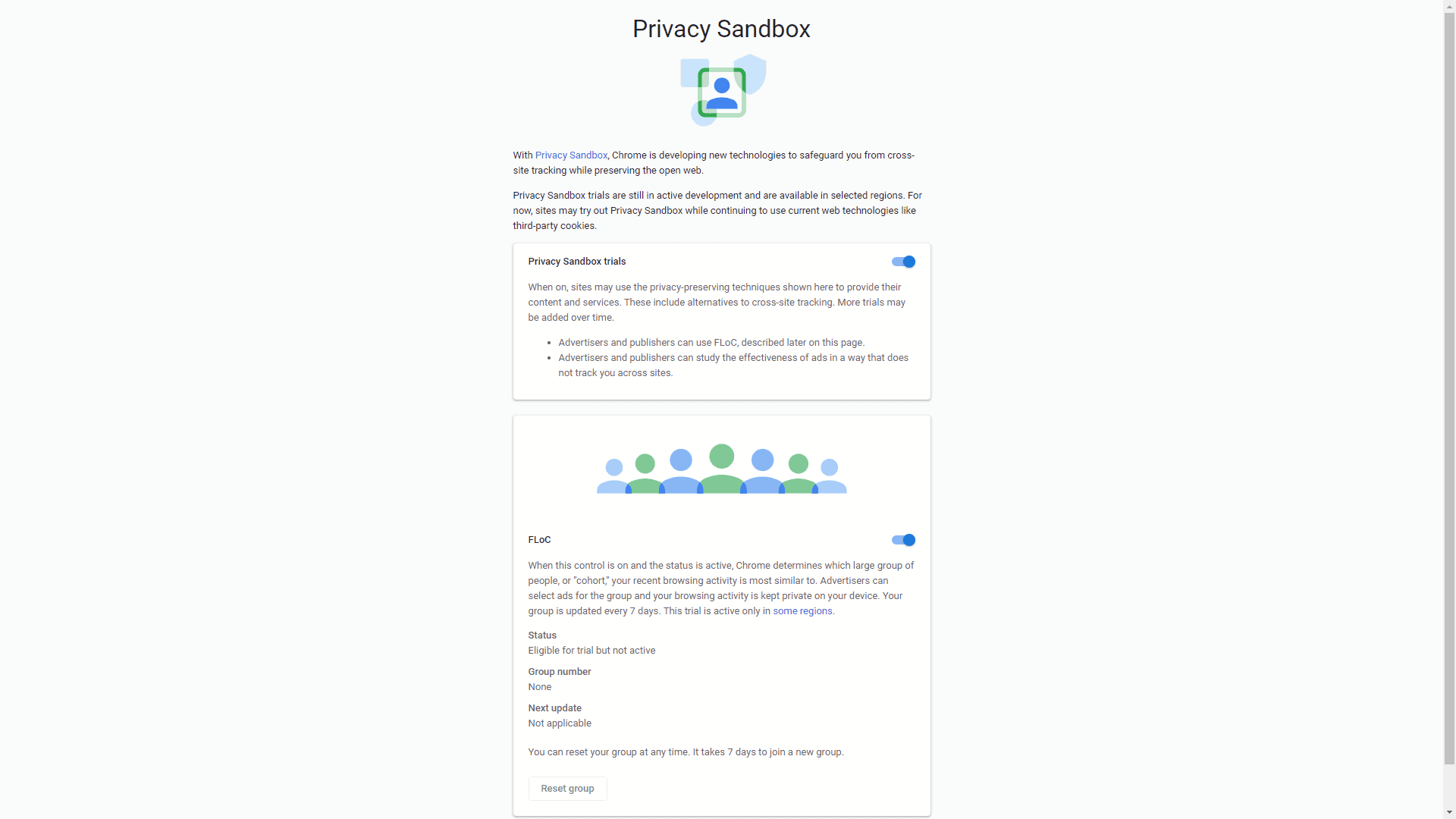
Google is working on a privacy-commencement advertising model that doesn't employ cantankerous-site tracking techniques.
Tracking cookies allow advertising companies similar Google to find out what each user's preferences and interests are by collecting that user's online action. Advertisement companies use cookies to identify individual users and create ads tailored to each user's interest, as explained above.
This generates profit for companies like Google and keeps internet services in performance, but it compromises user privacy in the procedure. FLoC presents an culling strategy.
With FLoC, Chrome volition analyze user activity inside the browser and place you in a group, or "cohort," of those with similar browsing habits. The aggregate cohort datasets will exist reported to websites that use FLoC, so your private browsing information will non be distinguished from everyone else within your group.
That's the theory, anyway. Not anybody is persuaded that Privacy Sandbox will do much to protect user privacy, only the feature is still undergoing development and will well-nigh probable exist changed in substantial means as fourth dimension goes on.
Incognito Way
Google Chrome is famous for innovating "Incognito Mode." Going incognito in Chrome opens a split window that doesn't locally store history, cookies or site data, simply yous can still bookmark pages and download files.
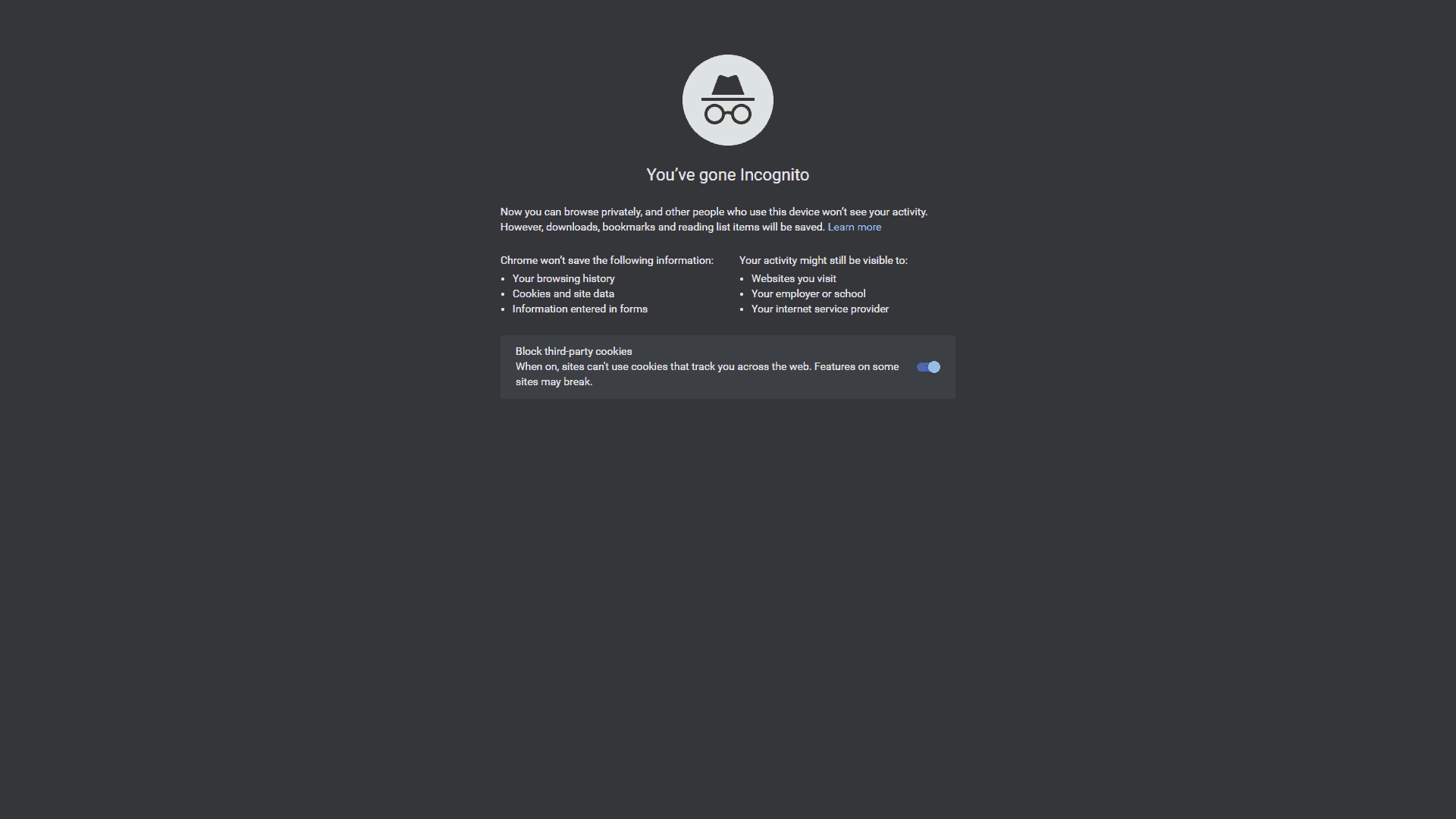
Sign in to your usual services without leaving a trace of your activity.
Incognito Mode is commonly used to sign in to services from someone else's device. In one case you shut your incognito tabs or windows, everything vanishes, then you won't have to manually delete cookies, saved credentials or other information that could be driveling by someone else using the device.
Browsing with an incognito window won't shield your activity from your internet service provider, the websites you lot visit or, potentially, your school or employer. It's a mutual misconception that this manner volition make yous anonymous online, but the function of Incognito Mode is much narrower than that. Nosotros suggest using a VPN to hibernate your identity online instead.
The Verdict
Google is without a uncertainty the industry standard for internet browsers and that doesn't appear to be changing anytime soon. There's lilliputian to complain about regarding the function of the browser, given Chrome'due south wide assortment of tools and user-friendly interface. Information technology's loaded with useful tools on its own and can exist augmented with its vast library of extensions.
Privacy is the main factor each prospective Chrome user should accept into business relationship before using this browser. Google'due south data collection practices require users to make a tradeoff between privacy and ease of use when using Chrome, and so your decision to employ this browser will come down to what you value more than.
If you value privacy higher up the many useful capabilities of Chrome, in that location are privacy-focused browsers based on Chrome's source code and compatible with Chrome's extension library that don't collect as much personal information. Mozilla Firefox is another option (read our Firefox review). You can cheque out how it fares against Chrome in our Chrome vs Firefox comparison.
What do you think about Google Chrome? Is it nonetheless the best browser or do you think some of its competitors are catching up? Is privacy your top value or would you rather have a simple-to-employ and feature-rich browser? Let us know in the comments below, and as always, thanks for reading.
DOWNLOAD HERE
Posted by: goldhistithad97.blogspot.com

